The IFTA's


The Irish Film and Television Awards were set up in 2003 with an aim to encourage "The simulation of original and creative production work and the encouragement of excellence through recognition, education and leadership in film and television".

The IFTA's have a large range of awards for both television and international work. It's film categories that are awarded are as follows:


  • Best Film

  • Best Director

  • Best Actor in a Lead Role

  • Best Actress in a Lead Role

  • Best Actor in a Supporting Role

  • Best Actress in a Supporting Role

  • Best Feature Documentary

Because there is not a large amount of productions in Ireland certain films tend to dominate the IFTA's. For example, in 2008, Garage won Best Film, Best Director, Best Script and Best Actor.


Despite this small criticism, I find it unusual that an award ceremon that celebrated those working in Irish film and television had not been set up before 2003.

Case Study: Jim Sheridan

Jim Sheridan is arguably Ireland's most important film-makers.
Sheridan was born in Dublin in 1949. He moved to America in 1982 (which served as an inspiration for his 2002 hit movie In America).
It wasn't until 1989 that made his first film. That first film was My Left Foot. This film launched Daniel-Day Lewis' career and earned Sheridan two Oscar nominations, one for best director and one for best screenplay.
His next film, in 1990, was an adaption of John B. Keane's play The Field.
In 1993, Sheridan reunited with Daniel Day-Lewis for his critically and commercially successful hit: In the Name of the Father. The film was nominated for seven Oscars, which included three nominations for Sheridan himself.
His next directoral effort was 1997 film, The Boxer, in which he once again collaborated with Daniel-Day Lewis. Sheridan was nominated for a Golden Globe for best director for The Boxer.
In 2002, Sheridan released In America, a film which gained Sheridan another Oscar nomination for best screenplay.
Perhaps suprisingly, Sheridan teamed up with Curtis Jackson (aka 50 Cent) for 2005's Get Rich or Die Tryin', a film about a drug dealer trying to make it as a rapper.
Sheridan's latest work was 2009's Brothers, which recieved only modest success.
Sheridan was one of the true Irish innovators who brought world attention to Irish cinema in the early 1990s.

Themes in Irish movies. Part 1: Republicanism

There has been some criticisms that Irish films often carry a very limited amount of themes. In Frank Stapleton's The Fifth Province, a satire on filmmaking, he urges 'No more stories about Irish mothers, preists, sexual repressions and the miseries of rural life.'
Although it is unfair to limit the meanings of all Irish movies to a few themes, I will look at themes in Irish cinema in general, which may help to understand the issues that most irish films are concerned with.
The notion of nationalism, and in particular Ireland's quest for a united Republic, is well documented in Irish movies. From the earliest films in Ireland, such as Irish Destiny, to our biggest movie successes, such as Michael Collins, and even in some of Ireland's more experimental productions, such as 2008's Hunger, notions of nationalism are faced.
Irish films often portray these political points through personal stories. These stories often have a backdrop of Irish nationalism.
As Martin Loone notes in his book Irish Film: The Emergence of a Contemporary Cinema, Irish cinema commonly features a "kind of national questioning that we have identified as an aspect of recent Irish cinema, revisiting a particularily acrimonious and unpleasant episode in the recent history of Ireland to draw lessons for the present."
Examples of Irish films that contain a personal story with a political backdrop are; Some Mothers Son, where the story of the H-Block hunger strike is told from the point of view of one of the mothers of a H-Block prisoner. Another example is The Wind that Shakes the Barley, this shows the experiences of two brothers as they are turned against each other in the Irish Civil War. in this sense we get the true atrocities of the Irish Civil War through a personal story of two brothers.

I will be looking at some other common themes in Irish movies in later posts.

Good Irish accents

Although the Irish accent has been well and truly butchered by foreigners (especially Americans) trying to portray it on the silver screen, we have to give credit to those who have done a good job. Perhaps unsuprisingly this list isn't as long as those that have done a bad job of the Irish accent!


Sophie Myles


Sophie Myles portrayed the daughter of an Irish king in 2006's romantic drama Tristan and Isolde. Although the film is full of wishy-washy romance, Sophie Myles, a Londoner, shines through with an authentic sounding Irish accent. http://www.youtube.com/watch?v=8HTYyB3Sc9w&feature=related=related


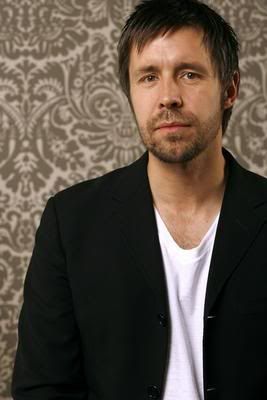
Paddy Considine

Paddy by name and paddy by nature, well if his Irish accent is anything to go by. In Jim Sheridan's 2003 hit In America, Paddy Considine, a Brit, portrays Johnny the father of a family of Irish emmigrants trying to make a new life for themselves in New York. Considine does an impressive Irish accent throughout. http://www.youtube.com/watch?v=JNrrLO_Pus8&feature=related


Kelly MacDonald

Scottish actress, Kelly MacDonald, sounds like a Dublin native when she starred in John Crowley's 2003 film Intermission. Her linguistic skills also shone through in No Country For Old Men in which she pulled off a Texas accent.http://www.youtube.com/watch?v=WYPTrcho84s


Cate Blanchett

Cate Blanchett pulled off both a great performance and a good Irish accent in her portrayel of Veronica Guerin in a 2003 movie based on the journalists life. It is hard to believe that Cate Blanchett is an Australian after her believable performance in Veronica Guerin. http://www.youtube.com/watch?v=0tM4z0QsVh8


All those in the list below should take note! These are examples if good Irish accents.

Bad Irish accents in films!

As we are talking about how Irish characters are represented in mainstream movies I thought it would be interesting to look at one aspect which can really irritate irish people: getting the Irish accent wrong!

There are many Hollywood heavy-weights that are guilty of this crime. But let's not be too harsh the Irish accent, along with the Scottish and South African are some of the hardest accents to get right without over-doing it.

Let now have a look at some of the worst instances of the Irish accent being re-created:

Sean Connery

Probably one of the worst offenders of balntantly destroying the Irish accent. Firstly, in Darby O'Gill and the Little People. http://www.youtube.com/watchv=wA45t2BLvbo&feature=relatedv=wA45t2BLvbo&feature=relatedre=related

Did Sean Connery learn from his mistakes? I'm afraid he did not! He repeated his failure of an Irish accent in The Untouchables, were he seemed to not bother to lose his Scottish accent! http://www.youtube.com/watch?v=7g0RLyxP13o


Julia Roberts

Sean Connery is not alone in the charge of being a multi-offender of a bad Irish accent. Hollywood's darling, Julia Roberts, is also guilty.

Roberts plays an Irish servant to Dr. Jekyll in 1996 movie Mary Reilly. Unfortunately, unsuspecting victims of Mr.Hyde are not the only things being butchered in this movie; the Irish accent also takes quite a serious pounding. http://www.youtube.com/watch?v=H_smkhn4plY&feature=relatedv=H_smkhn4plY&feature=related


She repeated her "oirish" accent in another 1996 film Michael Collins. http://www.youtube.com/watch?v=OONwAcZcng8&feature=relatedated


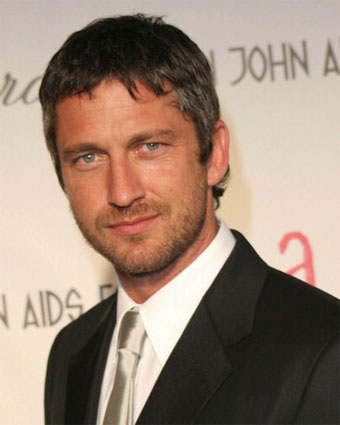
Gerard Butler

Another man who got the Irish accent very, very wrong in romantic comedy P.S. I Love You.

Despite just living across the pond (he is Scottish) he also got the accent wrong.


Thankfully, though, Butler had the good grace to apologise for his his Irish impression! http://www.youtube.com/watch?v=MJJmoYp_2tw

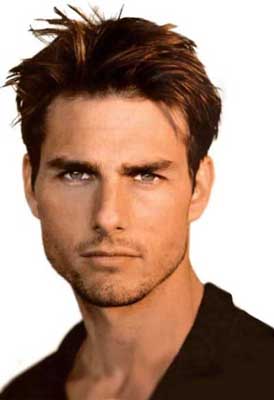
Tom Cruise

In 1992, Tom Cruise played hot-headed Irishman Joseph Donnelly in Far and Away.

What ensued was one of the most notorious slaughters of the Irish accent in modern times.


Lucky for Tom, he had the Mission Impossible franchise to fall back on!


Tommy Lee Jones

In perhaps one of his lesser known films, Tommy Lee Jones played an Irish terrorist in 1994 action movie Blown Away.

Although this film is not as well known as some of the other films on this list, it still desverves a spot because Tommy Lee Jones' Irish accent is just dire!


Kevin Spacey
Kevin Spacey has many fans and because ofhis performances many people are willing to overlooksome of his flaws. Not me though! In 2000's Ordinary Decent Criminal, set in Dublin, Spacey's only crime is destroying our native accent!


Richard Gere

Richard Gere is no stranger to destroying accents. Not only did he destroy the British accent in 1995's First Knight, but he also destroyed the Irish accent in 1997's The Jackal.

In this film he played an ex-IRA member (suprise, suprise) trying to catch an assasin. Hear his horrible takeon the Irish accent here. http://www.youtube.com/watch?v=JKV6_hB6nV0hB6nV0


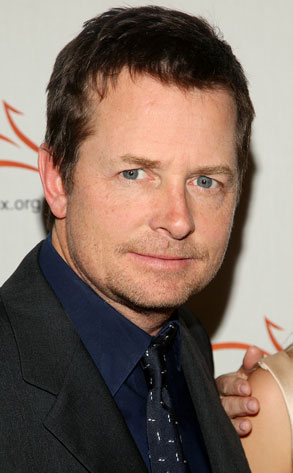
Michael J. Fox

In Back to the Future 3, Michael Fox shows that Irish accents were no better in 1885! In this scene we are introduced to Marty McFly's great-great Irish grandad. Sorry for the video quality, but I think it is still easy to hear the bad Irish accent. http://www.youtube.com/watch?v=eHcoYyxU6MU


Chris O'Donnell

I'm afraid an Irish second-name doesn't save Chris O'Donnell on this one! In 1995 Chris O'Donnell played Jack Foley in Circle of Friends, set in 1950s Ireland.


His accent has to be heard to be believed. http://www.youtube.com/watch?v=HhsTEGHMepI


Justin Theroux

Another American messing up the Irish accent! Justin Theroux plays another Irish bad guy! He does no credit to the Irish accent, he seems to mix a Scottish accent and a stereotypical Irish accent, whatever it is, it isn't good! http://www.youtube.com/watch?v=u4_f-Ht5-vY


There are many other people out there who have done terrible jobs. But these are shining, stinking examples. If you can think of any other bad Oirish accents, please leave a comment!

How the Irish are represented in films

Many people, myself included, living in Ireland are unhappy about Irish people are represented in mainstream cinema.


This blog entry is refering to how people who are portrayed to be Irish, and not necessarily irish actors, are used in films. I will be examining irish actors in a later blog entry.

I have noticed that there seems to be a minority of roles that Irish people can be portrayed as in mainstream cinema.

For example, Irish people have been represented quite heavily as violent, drunken and, to be honest, quite often plain crazy. We are portrayed as roguish, renegade sort of characters.

It is easy to link our violent cinema image to our turbulent past and, in particular with The Troubles in the North in the 1970s. It is also because of the large amount, and notorious reputation, of Irish-American gangs that are operating (or have been operating) in America throughout the years.


This violence has allowed the Irish to be portrayed as IRA, bomb-making terrorists by mainstream cinema. There are many cases of these, for example: The Devil's Own (1997), The Jackal (1997) and Blown Away (1994) along with many others.

Irish immigrants' violent past in New York, was also well documented in Martin Scorcese's 2002 epic drama film; The Gangs of New York.

I think the representation of Irish people being crazy, or at least a bit wired, can be blamed, almost entirely on David O'Hara. Despite the fact that David O'Hara is actually a Scottish actor, he has been continueously cast in Irish roles. He played an Irishman in films such as The Departed and The Matchmaker.


David O'Hara has always given a quirky performance. But if we look at his performance in films such as Bravheart (above) where he was cast as a crazy Irish outlaw, or his renegade role in Some Mothers Son where he played an unusual IRA terrorist, I can begin to see why we got the typecast.

There has been an unusual move in the last few years, to have Irish men as the male leads in romantic comedies.

These are mainly to cater for American audiences who may have a exotic view of Irish people and way of life. This can be seen in 2007's P.S. I love you, which shows two Irish men which American actress Hillary Swank has feeling for.

Ironically, neither Irish role was filled with Irish actors. The roles instead went to Gerard Butler, who is Scottish, and Jeffrey Dean Morgan, who is American.

Another example of such an Irish role can be seen in the more recent Leap Year. This again has an Irish male lead, this time played by Mattew Goode, ironically an English actor.

The Irish Times' Donald Clarke, described the film "offensive, reactionary, patrionising filth" and said "Hollywood is incapable of seeing the Irish as anything but IRA men or twinkly rural imbeciles."

Donald Clarke may be on to something there, especially when you consider the "Oirish" characters that are in most mainstream movies.


Case Study 1: Intermission


Intermission is one of my all time favourite Irish films. It is a black comedy set in Dublin. It has a cast which best represents Ireland's young male talent, in the form of Cillian Murphy and Colin Farrell. It also stars some other heavy-weights of Irish cinema, such as Colm Meaney.

The 2003 film, directed by John Crowley, circles around a couple and the people surrounding them. There are several main stories that are interlinked throughout the movie and there is a vast and colourful cast with over 50 speaking parts.

The writing is witty and sharp and captures the feel of our capital city. This is very much a tip of the hat to first-time script writer Mark Rowe, whose masterful wit shines throughout.

Intermission, which recieved generally positive reviews, deals with many unsavoury characters such as Lehiff (Colin Farrell), who is both comical and intimidating as a scumbag throughout. As well as impressive performances from Cillian Murphy as John a confused in love small time crook and renegade detective, Jerry Lynch (Colm Meaney) who has a taste for fame.
This film has one of the most representative cast of Irish actors and it shows the great wit of Irish humour throughout.